

Morocco’s landscape transforms dramatically as you journey from the bustling streets of Marrakech to the golden dunes of Merzouga. A 4 days tour from Marrakech to Merzouga Desert offers travelers an incredible opportunity to experience the country’s diverse terrain, ancient kasbahs, and the magic of the Sahara. This route has become one of Morocco’s most popular adventures, combining cultural immersion with natural wonders.
Why Choose the 4-Day Desert Tour
The 4-day itinerary strikes the perfect balance between seeing major attractions and having time to truly experience each location. Unlike rushed 3-day tours, this extended journey allows for a more relaxed pace with opportunities to explore off-the-beaten-path sites and enjoy the desert without feeling hurried.
This tour takes you through the High Atlas Mountains, ancient fortified villages, dramatic gorges, and palm-filled valleys before reaching the spectacular Erg Chebbi dunes in Merzouga. Along the way, you’ll encounter Berber culture, historic film locations, and landscapes that seem pulled from another world.
Day 1: Marrakech to Dades Valley
Your journey begins early in Marrakech, departing the red city as the morning sun illuminates the snow-capped Atlas Mountains ahead. The drive takes you through the Tizi n’Tichka pass, which reaches 2,260 meters and offers breathtaking mountain views. Stop at roadside viewpoints where local vendors sell fossils, minerals, and handcrafted goods.
Ait Benhaddou
The first major highlight is Ait Benhaddou, a UNESCO World Heritage Site and one of Morocco’s most photographed locations. This ancient fortified village, or ksar, features mud-brick architecture that has remained largely unchanged for centuries. The earthen buildings rise like a sandcastle against the desert backdrop.
Film enthusiasts will recognize Ait Benhaddou from movies like Gladiator, Game of Thrones, and Lawrence of Arabia. Take time to walk through the narrow passages, climb to the top for panoramic views, and perhaps share mint tea with residents who still live within these historic walls.
Ouarzazate and the Rose Valley
Continue to Ouarzazate, known as the “Gateway to the Desert” and home to major film studios. The city serves as a base for international productions seeking desert and historic settings. If time permits, visit the Taourirt Kasbah or the Cinema Museum.
Drive through the Valley of Roses, where locals cultivate damask roses harvested each May during the Rose Festival. The valley’s pink-hued villages and lush greenery contrast beautifully with the surrounding arid mountains. You’ll reach Dades Valley by evening, where dramatic rock formations called “monkey fingers” create an otherworldly landscape. Spend the night in a traditional guesthouse with views of the valley.
Day 2: Dades Valley to Merzouga
Wake to fresh mountain air and the sight of the Dades Gorge’s towering cliffs. After breakfast, the journey continues through some of Morocco’s most spectacular scenery.
Todra Gorge
The route leads to Todra Gorge, where limestone cliffs rise 300 meters on either side of a narrow canyon. The walls glow orange and pink in certain light, and a cool river runs through the base. Walk along the gorge floor, watching rock climbers tackle challenging routes on the vertical faces. Local Berber women often sell handwoven textiles near the entrance.
Journey to Merzouga
The landscape changes dramatically as you head east toward Merzouga. Palm groves give way to increasingly arid terrain marked by black volcanic rock formations and scattered oases. You’ll pass through Erfoud, famous for its fossil workshops where artisans transform ancient marine creatures into decorative pieces.
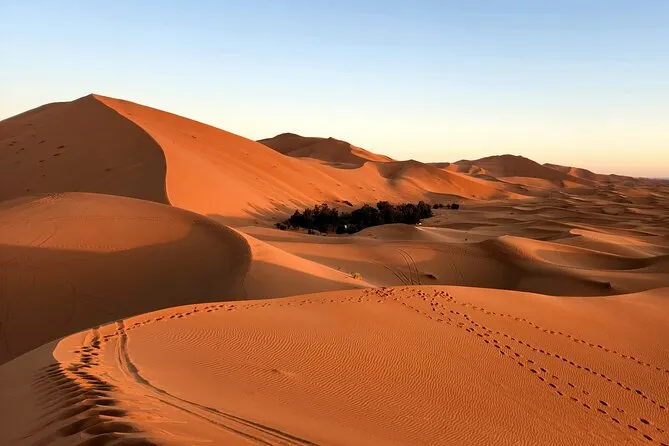
Arriving in Merzouga by late afternoon, you’ll catch your first glimpse of the Erg Chebbi dunes rising like orange waves from the desert floor. These dunes reach heights of 150 meters and stretch for about 28 kilometers along the Algerian border.
Camel Trek and Desert Camp
The evening’s adventure begins with a camel trek into the dunes. As the sun lowers, the sand shifts through shades of gold, amber, and deep orange. The rhythmic swaying of the camel and the silence of the desert create a meditative experience unlike anything in modern life.
Reach your desert camp as darkness falls and stars begin appearing in astonishing numbers. Traditional Berber tents furnished with colorful carpets and comfortable bedding serve as your accommodation. Dinner is served around the campfire, often featuring tagine, grilled meats, and fresh salads. After the meal, Berber musicians play traditional instruments and sing songs passed down through generations. The night sky in the Sahara, free from light pollution, reveals the Milky Way in stunning clarity.
Day 3: Merzouga Desert Exploration
Wake before dawn to witness sunrise over the dunes. The early morning light transforms the landscape into a photographer’s paradise, with long shadows emphasizing every curve and ripple in the sand. After breakfast at camp, return to Merzouga village by camel or 4×4 vehicle.
Desert Activities
Day 3 offers flexibility to explore the Merzouga area more thoroughly. Options include visiting nomadic Berber families who still live in traditional desert dwellings, learning about their lifestyle and perhaps sharing tea in their tents. The hospitality of desert people is legendary, and these encounters provide genuine cultural insight.
Visit Khamlia village, home to Gnawa people whose ancestors came from sub-Saharan Africa. The village is known for its spiritual music featuring the guembri (a three-stringed bass instrument) and metal castanets. Local musicians often perform for visitors, and the hypnotic rhythms create an unforgettable experience.
Explore the seasonal Dayet Srji salt lake, which sometimes attracts flamingos and other migratory birds during wetter periods. The contrast between the wetland and surrounding desert creates a unique ecosystem.
For adventure seekers, quad biking or sandboarding on the dunes offers an adrenaline rush. Some tours include visits to abandoned mines where kohl (traditional eye makeup) was once extracted, or fossil beds containing ancient marine life from when this region lay beneath an ocean.
Second Night in the Desert
Spend another night at a desert camp, possibly in a different location for varied perspectives of the dunes. Some premium camps offer private tents with attached bathrooms, while others maintain a more authentic, rustic atmosphere. The second sunset and stargazing session often feels even more magical than the first.
Day 4: Merzouga to Marrakech
The return journey covers significant distance but includes different stops to avoid repetition. Depart early to maximize daylight hours and minimize the intensity of midday desert heat.
Alternative Return Route
Many tours take a slightly different route back, passing through the Draa Valley, Morocco’s longest river valley. This area features extensive palm groves that produce some of Morocco’s best dates. The greenery provides welcome relief after the desert’s barrenness.
Stop at Agdz or Zagora for lunch and a brief rest. These towns serve as gateways between the desert and mountains, maintaining a slower pace of life than Marrakech. Continue through the Anti-Atlas Mountains, a smaller range south of the High Atlas, with landscapes of golden stone and ancient kasbahs.
The final stretch brings you back over the Tizi n’Tichka pass, completing the circuit. Arrive in Marrakech by evening, typically between 7 and 9 PM depending on road conditions and stop durations. The contrast between the desert’s silence and Marrakech’s bustling Jemaa el-Fnaa square highlights just how much ground you’ve covered.
Practical Information
Best Time to Travel
Spring (March to May) and autumn (September to November) offer ideal conditions with comfortable daytime temperatures and cool nights. Summer brings extreme heat, with desert temperatures exceeding 45°C, though nights remain pleasant. Winter sees cold nights in the desert, sometimes dropping below freezing, but daytime temperatures are manageable.
What to Pack
Layer your clothing for temperature fluctuations. Bring lightweight, breathable clothing for daytime and warm layers for cold desert nights. Essential items include sunscreen, sunglasses, a hat, comfortable walking shoes, and a scarf for dust protection. A headlamp proves useful around camp, and a power bank keeps devices charged since electricity in desert camps may be limited.
Tour Types and Costs
Tours range from budget group experiences to luxury private journeys. Budget tours start around $200 per person, typically with larger groups and basic accommodations. Mid-range tours cost $300 to $500 and offer smaller groups, better meals, and more comfortable camps. Luxury private tours exceed $800 per person but provide personalized service, upgraded vehicles, and premium desert camps with amenities.
Health and Safety
Stay hydrated throughout the journey, drinking bottled water regularly even when not feeling thirsty. The dry climate and altitude can cause dehydration faster than expected. Bring any personal medications and basic first aid supplies. Motion sickness medication may help during the mountain passes with their winding roads.
Cultural Insights
Morocco’s diverse population includes Arabs, Berbers, and people of sub-Saharan African descent. The tour passes through predominantly Berber regions where locals speak Tamazight languages alongside Arabic and often French. English is increasingly common in tourist areas.
Respect local customs by dressing modestly, especially in smaller villages. Women should cover shoulders and knees, while men should avoid going shirtless outside the desert camp. Always ask permission before photographing people. Small purchases from local vendors help support rural communities whose income relies partly on tourism.
Conclusion: Key Takeaways
A 4 days tour from Marrakech to Merzouga Desert provides an immersive Moroccan experience that goes far beyond typical tourist activities. The extended timeframe allows deeper engagement with landscapes, culture, and the unique rhythm of desert life.
Choose your season carefully, with spring and autumn offering the best overall conditions. Pack for temperature extremes, from hot days to cold desert nights. Research tour operators thoroughly, reading recent reviews and confirming what’s included in the price. Private tours offer more flexibility, while group tours provide opportunities to meet fellow travelers.
Don’t rush the experience. The journey matters as much as the destinations, and the long drives reveal Morocco’s geographical diversity. Take time to explore Ait Benhaddou thoroughly, walk deep into Todra Gorge, and engage with local people you meet along the way.
The desert nights rank among the tour’s most memorable moments. Disconnect from devices and immerse yourself in the silence, the stars, and the ancient traditions of Berber music around the fire. These experiences create lasting memories that photographs alone cannot capture.
Budget appropriately for the experience you want. While cheaper tours exist, investing in better accommodations and smaller groups often enhances satisfaction significantly. Consider tipping guides and drivers who work hard to ensure a positive experience.
This tour challenges you with long days and basic facilities in remote areas, but rewards you with some of North Africa’s most stunning scenery and authentic cultural encounters. From kasbahs to dunes, gorges to oases, the 4-day journey from Marrakech to Merzouga captures the essence of Morocco’s southern landscapes and the enduring spirit of its desert people.
