

Marrakech to fes desert tour represents two of North Africa’s most sought-after travel experiences. Whether you choose the round-trip journey to Merzouga or the one-way adventure ending in Fes, both routes deliver unforgettable encounters with the Sahara Desert, ancient kasbahs, dramatic mountain passes, and authentic Berber culture. Understanding the differences between these iconic itineraries helps travelers select the perfect option matching their time constraints, interests, and travel goals.
Marrakech to Merzouga Desert Tour: The Classic Round-Trip Experience
The Marrakech to Merzouga tour typically spans three to four days, offering a focused desert immersion with the convenience of returning to your starting point. This circular route appeals to travelers based in Marrakech who want to experience the Sahara without the logistics of one-way travel or those with limited time seeking maximum desert impact.
Day One: Journey Through the High Atlas
Departing Marrakech in early morning, the route immediately ascends into the High Atlas Mountains via the famous Tizi n’Tichka pass, reaching 2,260 meters elevation. This spectacular mountain road winds through Berber villages that cling to steep hillsides, their terraced gardens demonstrating agricultural ingenuity developed over centuries. Roadside markets offer walnuts, almonds, and honey produced by mountain communities who have inhabited these peaks for generations.
The UNESCO World Heritage site of Ait Benhaddou provides the journey’s first major highlight. This fortified kasbah, constructed entirely from rammed earth, rises dramatically from the hillside like a monument to medieval Moroccan architecture. Its labyrinthine passages, decorated towers, and strategic positioning reveal why such structures protected valuable trade routes for centuries. The kasbah’s fame as a filming location for productions including “Gladiator” and “Game of Thrones” adds cinematic allure to historical significance.
Continuing through Ouarzazate, often called Morocco’s Hollywood due to its film studios, the landscape gradually transforms. Palm groves appear along valley floors, kasbahs dot the horizon, and the air becomes noticeably drier. Evening accommodation in Dades Valley or Boumalne provides rest before the next day’s desert approach.
Day Two: Gorges and Gateway to the Sahara
Morning exploration of either Dades Gorge or Todra Gorge showcases Morocco’s geological drama. Todra Gorge particularly impresses with its narrow canyon where 300-meter limestone cliffs create a corridor barely ten meters wide. Morning light filtering through this natural formation creates magical photography opportunities while rock climbers tackle the challenging vertical faces that attract enthusiasts worldwide.
The journey continues through the Ziz Valley, an enormous palm oasis stretching over 100 kilometers. This ribbon of green sustained by the Ziz River demonstrates how traditional irrigation systems called khettaras have supported communities for millennia in otherwise barren landscapes. Strategic viewpoints reveal the full scope of this agricultural miracle contrasting sharply with surrounding desert terrain.
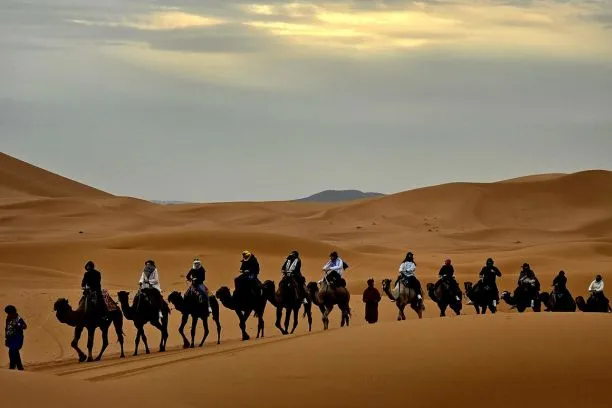
Arrival in Merzouga, the small town at the edge of Erg Chebbi, marks the transition from rocky desert to genuine sand sea. Here, motorized transport gives way to camels for the timeless trek into the dunes. The afternoon camel caravan winds between towering sand mountains exceeding 150 meters in height, with sunset painting the landscape in constantly changing shades of gold, amber, and crimson.
The Berber desert camp offers traditional hospitality combining nomadic authenticity with varying comfort levels. After dinner prepared using traditional methods, guides share stories around campfires, demonstrate music using drums and stringed instruments, and explain desert navigation by stars. The unpolluted Saharan sky reveals celestial wonders invisible in light-polluted environments.
Day Three: Desert Dawn and Return Journey
Pre-dawn rising rewards travelers with one of nature’s most spectacular performances: sunrise over the Sahara. Watching darkness transform into brilliant gold as the sun emerges over endless dunes creates memories lasting far beyond the journey itself. Many climb nearby dunes for panoramic views and silhouette photographs against the awakening sky.
After breakfast and the return camel trek to Merzouga, the journey back to Marrakech begins, typically following alternative routes showcasing different landscapes and stopping at sites missed during the outbound journey. The return drive, while long, breaks up with strategic stops at cooperatives producing argan oil, pottery, or traditional crafts, arriving in Marrakech by evening.
Marrakech to Fes Desert Tour: The Grand Traverse
The Marrakech to Fes desert tour represents Morocco’s ultimate overland adventure, combining desert immersion with travel between two of the country’s most captivating imperial cities. This one-way journey typically requires three to four days, offering the same spectacular desert experiences while eliminating backtracking and adding the architectural and cultural treasures of Fes.
The Shared Journey: Days One and Two
The initial stages mirror the Merzouga round-trip tour, crossing the High Atlas Mountains, exploring Ait Benhaddou, traversing dramatic gorges, and reaching the Sahara Desert for the camel trek and overnight desert camp experience. These shared elements deliver identical desert immersion regardless of which tour you choose, with the same opportunities for sunrise photography, traditional music, and stargazing beneath the Milky Way.
Day Three: The Divergence Toward Fes
The third day distinguishes the Fes-bound tour from the Marrakech return. After sunrise and breakfast in the desert, the route heads north toward Fes rather than retracing steps westward. This northern trajectory crosses the Ziz Valley once more before entering the Middle Atlas Mountains, a landscape dramatically different from the High Atlas crossed earlier.
The Middle Atlas presents greener, more forested terrain with cedar forests that support populations of Barbary macaques, the only macaque species found outside Asia. These forests contain ancient cedars, some achieving massive proportions after centuries of growth. Roadside encounters with macaque troops provide wildlife viewing opportunities particularly exciting for families with children.
Midelt, positioned between the Middle and High Atlas ranges, provides a lunch stop where the town’s famous apple orchards supply fresh fruit and juices. The landscape here demonstrates Morocco’s agricultural diversity with irrigated fields supporting various crops despite the challenging climate.
The afternoon brings passage through Azrou, a Berber town known for handicrafts including hand-woven carpets and carved cedar items. Artisan cooperatives welcome visitors interested in observing traditional techniques passed through generations of master craftsmen.
Ifrane appears almost surreal after days in desert and mountain landscapes. This planned city, built during the French protectorate, features Alpine-style architecture, manicured parks, and orderly streets earning it the nickname “Little Switzerland.” The contrast with traditional Moroccan towns demonstrates the country’s remarkable diversity.
Arrival in Fes: Morocco’s Spiritual Capital
Evening arrival in Fes marks the journey’s conclusion in Morocco’s oldest imperial city and spiritual heart. Founded in the 9th century, Fes el-Bali constitutes the world’s largest living medieval city, a UNESCO World Heritage site where approximately 9,400 lanes and alleys create a labyrinth that has barely changed in centuries.
Most tours include guided exploration of Fes the following morning before tour conclusion, allowing visitors to experience the Chouara Tannery where leather has been processed using medieval methods for over a millennium, the University of Al-Qarawiyyin recognized as the world’s oldest continuously operating degree-granting institution, and the intricate souks where craftsmen practice trades requiring years of apprenticeship.
Choosing Between the Two Tours: Key Considerations
Several factors should influence your decision between the Marrakech round-trip and the Fes one-way tour. Time constraints represent the most obvious consideration: both tours can be completed in three days minimum, though four days allows more relaxed pacing. If your time in Morocco is limited and you’re based in Marrakech, the round-trip option eliminates the need to arrange separate transport back or to continue onward.
Logistical preferences matter significantly. The round-trip tour returns you to your starting point, simplifying luggage storage and accommodation arrangements. The one-way tour requires either arranging return transport to Marrakech, continuing to other Moroccan destinations, or flying out from Fes. However, this “open-jaw” routing eliminates backtracking and maximizes geographic coverage.
Interest in Fes itself should factor heavily into your decision. Morocco’s oldest imperial city offers cultural and historical treasures rivaling anything in Marrakech. If you’re fascinated by medieval Islamic architecture, traditional crafts, and authentic medina life, the Fes-ending tour provides these experiences without requiring separate travel arrangements. Conversely, if desert immersion is your primary goal and you’re less interested in urban exploration, the round-trip focuses more time on Saharan experiences.
Budget considerations show minimal difference between the tours. The one-way tour typically costs slightly more due to longer driving distances and the inability of tour operators to return with passengers, but this difference rarely exceeds 10-15%. Both tours include similar accommodation standards, meals, and activities, with pricing variations depending more on comfort level and group size than routing.
Practical Planning for Both Tours
Regardless of which tour you select, certain planning considerations apply universally. Seasonal timing dramatically affects your experience, with spring (March-May) and autumn (September-November) offering optimal weather conditions. These shoulder seasons provide comfortable temperatures for both mountain crossings and desert exploration, clear skies for stargazing and photography, and moderate tourist numbers ensuring availability without overcrowding.
Summer (June-August) brings extreme heat to the desert regions, with daytime temperatures frequently exceeding 45°C. This makes outdoor activities challenging and potentially dangerous. However, summer nights remain pleasant, and reduced tourist numbers mean better availability and sometimes lower prices. Coastal and mountain areas maintain more moderate temperatures, making partial itineraries still enjoyable.
Winter (December-February) presents opposite challenges with cold desert nights requiring substantial bedding and warm clothing. Mountain passes occasionally close due to snow, potentially requiring route alterations. However, winter offers crystal-clear skies perfect for photography and stargazing, comfortable daytime temperatures, and the unique experience of seeing the Sahara dusted with occasional rare snowfall.
Packing appropriately ensures comfort across varying conditions. Layered clothing proves essential as temperatures swing dramatically from cold mountain mornings to hot desert afternoons to freezing desert nights. Comfortable walking shoes for exploring kasbahs and gorges, sandals for desert sand, sun protection including hats and high-SPF sunscreen, and modest clothing respecting local culture should all feature in your luggage.
Conclusion
Both the marrakech to merzouga desert tour and the Marrakech to Fes one-way desert tours rank among Morocco’s most rewarding travel experiences. The shared elements crossing the dramatic High Atlas Mountains, exploring the architectural marvel of Ait Benhaddou, witnessing the geological wonders of Morocco’s great gorges, and experiencing authentic Sahara immersion with camel treks and Berber camps create unforgettable memories regardless of which routing you choose.
The decision ultimately depends on your specific circumstances, interests, and travel plans. The round-trip tour offers simplicity and logistics convenience, focusing maximum time on desert experiences without the complications of one-way travel. The Fes-ending tour provides greater geographic coverage, eliminates backtracking, and adds one of Morocco’s most culturally significant cities to your itinerary.
Whichever tour you select, proper planning regarding timing, packing, and choosing reputable tour operators ensures an experience that captures Morocco’s extraordinary diversity. From the bustling energy of Marrakech through the serene majesty of the Sahara to either your return to the Red City or arrival in ancient Fes, these journeys offer transformative encounters with landscapes, cultures, and traditions that have captivated travelers for centuries.
FAQ
Q: What’s the minimum duration for each tour?
A: Both tours can be completed in 3 days minimum, covering essential highlights including Ait Benhaddou, one gorge (usually Todra), Merzouga desert with overnight camp, and return journey or continuation to Fes. However, 4-day versions allow more relaxed pacing with additional stops, longer desert experiences, and reduced driving hours per day. The extra day significantly improves the experience by eliminating the rushed feeling.
Q: Which tour offers better value for money?
A: Both tours offer similar value as they share the most expensive components: desert camp experience, camel trekking, and Atlas Mountain crossings. The Marrakech round-trip costs slightly less (typically €150-250 per person for 3 days) versus the Fes one-way (€180-280 per person) due to operator logistics. However, the Fes tour eliminates backtracking and includes a second imperial city, potentially offering better overall value depending on your interests.
Q: Can I do the tour in reverse, starting from Fes?
A: Absolutely. The Fes to Marrakech desert tour is equally popular and follows the same route in reverse. Starting in Fes means exploring the medieval medina first, then journeying through Middle Atlas cedar forests before reaching the Sahara and crossing the High Atlas to Marrakech. This routing works perfectly for travelers arriving in Fes or preferring to end in Marrakech’s more tourist-friendly environment.
Q: How long are the driving days?
A: Driving times vary by day. Day one from Marrakech to Dades/Boumalne involves approximately 6-7 hours with stops. Day two to Merzouga is 4-5 hours. The return to Marrakech on day three is the longest at 8-9 hours, though broken up with stops. For Fes-bound tours, day three involves 7-8 hours to Fes. Four-day tours reduce daily driving by 1-2 hours, making the journey significantly more comfortable.
Q: What’s included in typical tour packages?
A: Standard inclusions are private transportation in comfortable air-conditioned vehicles, accommodation for all nights (hotels/guesthouses plus desert camp), daily breakfast and dinners, camel trekking experience, and English-speaking driver/guide. Typically NOT included are lunches, drinks, monument entrance fees (€20-40 total), and tips (€5-10 per day recommended). Always confirm specific inclusions when booking to avoid surprises.
Q: Is desert camping comfortable?
A: Comfort levels vary significantly by tour category. Standard camps provide Berber-style tents with proper mattresses and bedding, shared bathroom facilities with toilets and showers, and communal dining. Luxury camps offer private ensuite tents with proper beds, private bathrooms, superior meals, and more spacious layouts. Even basic camps provide magical stargazing and authentic cultural experiences. Confirm specific amenities when booking if comfort is a priority.
Q: Can these tours accommodate dietary restrictions?
A: Yes, reputable operators accommodate vegetarian, vegan, gluten-free, and other dietary requirements when informed in advance. Moroccan cuisine naturally includes many vegetarian dishes like vegetable tagines, couscous, and salads. Vegan options require more specific communication but are manageable. Inform your tour operator of all dietary restrictions at booking to ensure proper meal arrangements throughout the journey.
Q: Are these tours suitable for children and elderly travelers?
A: Both tours can work for families and seniors with appropriate planning. Children typically love camel riding and desert camping, though long driving days may challenge very young ones. Four-day tours with more relaxed pacing suit families better. Elderly travelers should consider mobility requirements: camel mounting/dismounting can be challenging, and some sites involve uneven terrain or stairs. Many operators offer 4×4 desert access instead of camels. Private tours allow pacing adjustments for specific needs.
Q: What if I want to extend my time in the desert?
A: Many operators offer extended desert experiences with additional nights at Erg Chebbi. Options include staying at desert-edge hotels in Merzouga with daily desert excursions, multi-night desert camping moving between different locations, desert activities like sandboarding or 4×4 dune driving, and visits to nomadic families or the Gnawa music village of Khamlia. These extensions typically add €50-150 per person per additional day depending on activities and accommodation level.
