

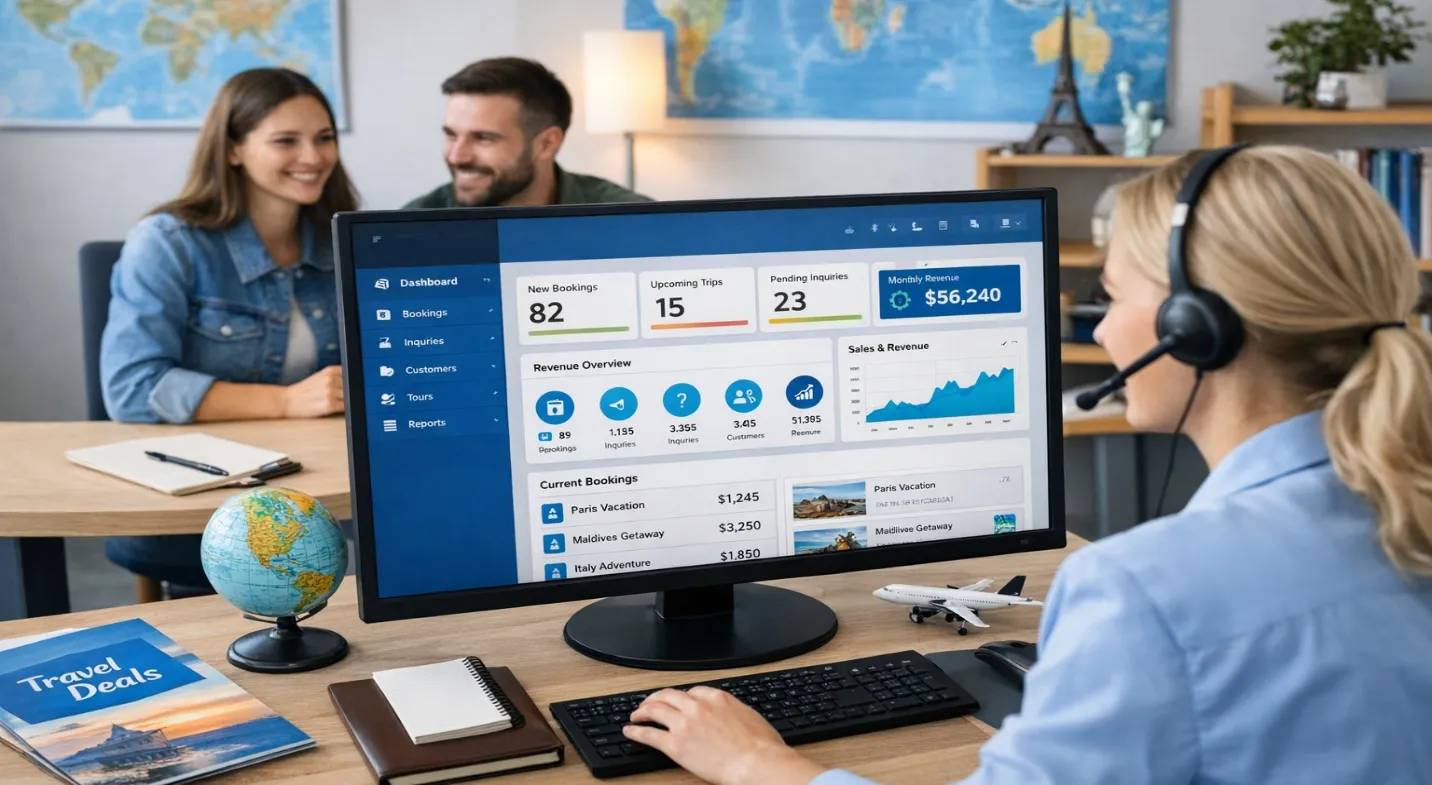
Being a travel agent is about more than just booking holidays. There are so many things in a day that teams may need to handle, such as inquiries, customer information, bookings, travel plans, customer-supplier relations, money, follow-up, and marketing. If these tasks are done with disjointed tools, then flows can become more difficult to manage. The right travel agency software can help to combine the key processes needed for a travel agency while keeping teams organized and providing an improved experience for customers.
Start With Core Agency Needs
Each travel agency is unique and software needs to be customized based on the specific business needs. For a small agency, customer management, and tracking of customer inquiries could be more important, whereas an expanding agency may require automated systems, team collaboration, reporting, and integration.
Identify tasks that can be done repeatedly and places where information can easily get lost, before comparing platforms. Look at your lead source, how your customers are captured, how you create your itineraries, and how you follow up after you send out proposals. The answers to these questions can be used to develop a realistic software list.
Prioritize Lead Management
When travelers are shopping for a trip, they will consider a number of different choices before choosing one. This means agencies really need a reliable way to catch new leads and track them smoothly.
Make it way easier to capture leads, note what clients need, assign team members and follow up on every inquiry using solid software. The sales pipeline can also serve as a valuable resource for your employees to understand which prospects are in the process of making a purchase, and which ones require further engagement.
This is particularly helpful when an agency gets inquiries via a number of different channels. Having all the relevant information in one system can decrease the necessity of looking through separate spreadsheets, inboxes and messaging applications.
Look for Customer Management Tools
Relationships with customers don’t just end there. Agencies can engage in a relationship with travelers who have come back with their choices of destination, type of accommodation, budget, activities, or communication.
These details should be easily accessible and maintainable on the right platform. When talking to former travelers, a handy customer profile can help employees have better context. This helps teams be more effective by not having to ask the customer for the same details over and over again.
Evaluate Booking and Itinerary Workflows
Planning travel may require several services and involve a number of changes. Changes to dates, accommodation, activities, transportation and/or destinations are available prior to acceptance of a trip.
This process should be facilitated by software, not made more complicated. Using itinerary tools, teams can plan trip information effectively and facilitate collaboration, and connected customer records can ensure that all relevant information is stored in a single location.
It’s also important for agencies to see if this platform fits into the existing booking methods and supplier connections.
Consider Communication and Automation
An area to assess is customer communication. Teams can interact with a traveler via email, phone, websites or messaging platforms and must ensure that they have context throughout.
Also, repetitive tasks can be minimized through automation. Reminders, notifications to customers, marketing emails and routine replies can be automated. The goal should be to decrease administrative workload while maintaining customer interactions in a personal way.
Communication is thus as crucial as administrative tasks when agencies delve into comparing travel agency software.
Check Reporting and Team Collaboration
Managers want to see what’s selling and what’s not when an agency grows. Reporting tools can be used to find out the volume of inquiries, conversion patterns, follow-up activity, etc, and much more beneficial business information.
Cooperation between team members is crucial as well. Relevant information relating to customers should be visible to employees, and they should be able to see the status of a customer’s inquiry without having to rely on informal communication. Handovers can be made easier and duplicated work minimized by having shared records.
Plan for Future Growth
Software should be used to address the agency’s needs for the future, not to address today’s problems. Over time, businesses have the option to add employees, deal with more inquiries, expand destination, or boost marketing activity.
When looking at a Travel agency management software, there are some factors you need to keep in mind, such as scalability, integrations, user management, automation, and ease of adoption. A flexible platform can help to minimize the cost of replacing systems when the business is changing directions.
Conclusion
If the appropriate software is used, a travel agency can handle inquiries, customer relationships, trip coordination, communication, and provide greater insight into the performance of the business. Agencies should consider using a platform not just because of the number of tools, but because they have the tools they need as well as what they are looking for. Trawiz.ai is a good option for businesses that are looking at new solutions to help with travel-related customer management and operations.
