

There’s a particular kind of quiet that only exists in the Yukon at night. You step outside in the cold, your breath hangs in front of you, and the sky overhead starts to move. Green ribbons stretch from one horizon to the other. If you’re standing there alone, it can feel like the sky is putting on the show just for you.
That feeling is why more people are booking an aurora viewing package for solo travelers in Yukon, and why a four-day trip is often the sweet spot. It gives you enough nights to catch the lights without taking a month off work.
This guide covers what a good 4-day package includes, when to go, what to expect, and how to choose one that suits traveling on your own.
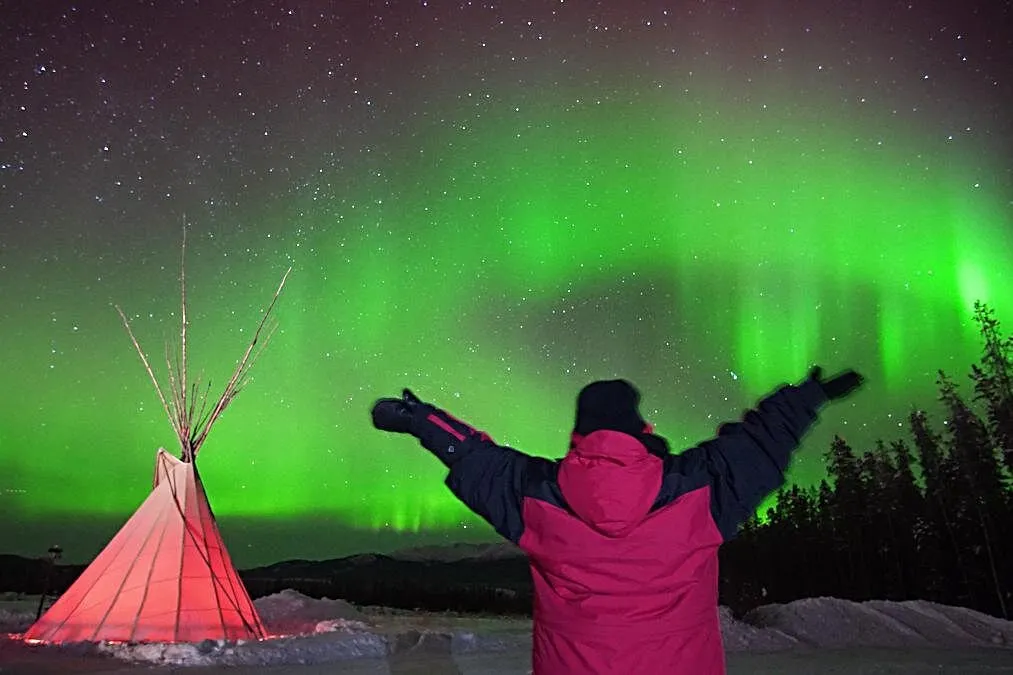
Why Yukon Is One of the Best Places on Earth to See the Aurora
Yukon sits beneath the auroral oval, the ring-shaped zone around the magnetic pole where northern lights activity is strongest. The territory also has dry air, very little light pollution outside its towns, and wide-open skies. Together these give you a high chance of clear, dark nights.
Whitehorse, the territorial capital, is the usual starting point. It has an airport, good accommodation, and tour operators who run aurora trips every night of the season. From there, you can be in a dark, quiet spot within thirty to forty-five minutes.
No operator can promise the aurora, because it is a natural phenomenon. But staying several nights improves your odds a lot, which is the main reason to choose a multi-day package over a single-evening tour.
Why Four Days Works So Well
Solo travelers often have limited time and a limited budget. Four days balances both.
The northern lights depend on solar activity and clear skies, and neither takes a day off to suit your itinerary. With three or four night-time viewing windows, a cloudy evening or a quiet solar night won’t ruin your trip. Most travelers who spend several nights in Yukon during peak season see the aurora at least once, and many see it more often.
Four days also leaves room to rest. Aurora hunting means late nights, and an itinerary that fills every daylight hour would leave you exhausted by day three.
What a Typical 4-Day Aurora Viewing Package Includes
Packages vary by operator, but a solid solo-friendly itinerary usually looks like this.
Day 1: Arrival and orientation. You arrive in Whitehorse, transfer to your hotel, and settle in. Many packages include a short briefing covering the aurora forecast, what to wear, and how to photograph the lights. In the evening, you may have a first aurora outing, often a gentle one close to town, so you can get used to the cold and the routine.
Day 2: Daytime culture and wildlife, aurora by night. Daylight hours in winter are short but beautiful. This is a good time for a visit to a local wildlife preserve, a walk along a frozen river, or a stop at a cultural centre to learn about the First Nations peoples whose history in the region goes back thousands of years. After dinner, you head out for a full aurora session, usually between about 10 p.m. and 1 a.m.
Day 3: Adventure day. Many packages offer an optional activity such as dog sledding, snowshoeing, or a soak in an outdoor hot spring. Soaking in hot mineral water under a sky full of aurora is one of the most memorable things you can do in the territory. Takhini Hot Springs, near Whitehorse, is a popular spot for it, though you should check current operating details with your provider.
Day 4: Final morning and departure. Sleep in, have a slow breakfast, pick up any souvenirs, and transfer to the airport. Some packages include a final-night buffer in case earlier nights were cloudy.
When you compare packages, check for heated viewing shelters or cabins, warm outerwear rentals, hot drinks, and a guide who knows how to read aurora forecasts and cloud cover. Those details matter more than any single attraction.
Why Packages Suit Solo Travelers Especially Well
Traveling alone has real perks: your own schedule, your own pace, and the freedom to stand in silence as long as you like. But it also raises practical questions. Who drives you out into the dark? What if you get cold and need to retreat? Who takes a photo of you under the sky?
A good package answers all of those:
-
Transport is handled. You don’t need to rent a car or drive icy rural roads at midnight.
-
You’re in a small group with a guide. Many operators keep groups small, and solo travelers often find themselves chatting with other like-minded people around a fire.
-
Safety is built in. Guides carry communication gear, know the roads, and watch the weather.
-
No single-supplement surprise (ideally). Some operators charge extra for solo occupancy, so ask about it before booking. Others offer shared-room matching.
If you prefer privacy, look for operators that offer a private or semi-private option. If you enjoy company, a small-group format is a great way to meet people.
When to Go
The aurora season in Yukon runs roughly from late August through mid-April. Each part of that window has its own character.
Late August to September: Mild temperatures, autumn colours, and open water that can reflect the aurora. It’s the most comfortable time for travelers who dislike deep cold.
December to February: Long nights, deep snow, and the classic winter experience. It’s also the coldest, so expect temperatures that can drop well below freezing.
March to early April: Often considered a favourite among photographers. Nights are still long enough, skies tend to be clearer, and the days are sunnier and a bit warmer.
Avoid planning around the full moon if you can. A bright moon washes out fainter displays, although a strong aurora still shines through it.
What to Pack
Cold is the thing most first-timers underestimate. Standing still for hours is much colder than walking around. Dress in layers:
-
A thermal base layer and a mid-layer such as fleece or wool
-
An insulated, windproof outer jacket and pants
-
Insulated, waterproof boots rated for extreme cold
-
Warm socks (bring spares), a hat, a neck gaiter, and liner gloves under heavy mittens
-
Hand and toe warmers
-
A camera or phone with a tripod, plus spare batteries, because cold drains them quickly
Many operators rent heavy winter gear, which can save you luggage space and money. Ask about it when you book.
Tips for Getting the Most From Your Trip
Be flexible with timing. Aurora can appear at 9 p.m. or 3 a.m. Tell your guide you’re happy to be woken up if the sky lights up.
Learn a little photography beforehand. A wide-angle lens, a long exposure of several seconds, and a high ISO will get you started. Even so, put the camera down for a few minutes and just watch. The naked eye experience is the point.
Check the forecast, but don’t obsess. Apps and forecasts help, but they’re not guaranteed. Treat them as hints rather than promises.
Book early. Peak-season packages for solo travelers fill up, especially around holidays and in March.
Read the cancellation terms. Weather can disrupt flights and tours, so a flexible policy is worth having.
How to Choose the Right Package
Ask a few simple questions before you commit:
-
How many separate aurora viewing nights are included?
-
What is the group size?
-
Is there a heated shelter at the viewing site?
-
Is winter clothing provided or available for rent?
-
How is the solo supplement handled?
-
What happens if the aurora doesn’t appear, or if clouds roll in?
Operators who answer clearly and honestly are usually the ones who run the best trips.
Final Thoughts
An aurora viewing package for solo travelers in Yukon isn’t just about seeing the northern lights. It’s a few days of stillness: open sky, cold air, and a warm cup of tea or coffee in your hands as you wait for the moment the whole sky lights up. Four days is long enough to give the aurora a real chance to appear, and short enough to fit comfortably into your routine.
So choose a trustworthy operator, dress in warm layers, keep your schedule flexible, and leave the rest to the sky. You’ll be traveling alone, but once the aurora starts to dance, you won’t feel lonely.
Ready to plan your trip? Check your dates, ask operators about the solo supplement and heated viewing shelters, and book your spot before peak season, because solo traveler packages fill up quickly.
